The operation of an artificial intelligence tattoo generator relies on complex deep learning models, especially generative adversarial networks (GANs). Such systems are typically trained on a dataset of over one million high-resolution tattoo images, which includes more than 50 style labels such as traditional, watercolor, and geometry, with model parameters reaching the billions. Take StyleGAN2 as an example. Its generator network contains over 30 million adjustable parameters. Through adversarial training, the output image resolution reaches 1024x1024 pixels, and the color accuracy error is controlled within ΔE<2.5 (CIEDE2000 standard). The training process consumes approximately 2,400 GPU hours, with a power consumption of 3,000 watts per hour using an NVIDIA V100 graphics card, and the cost of a single training session is about 7,200 US dollars.
At the user interaction level, the ai tattoo generator parses the text descriptions or sketches input by users through semantic segmentation technology. When a user inputs "Japanese koi", the system will match over 5,000 feature vectors in the latent space, and the generation time is usually less than 2.3 seconds. In 2023, the actual measurement data of TattooAI Company showed that its platform processed an average of 18 design requests per second, with a user satisfaction rate of 89.7%. The system adopts a real-time rendering engine, supports 4K resolution preview, and achieves a color reproduction rate of 98% with sRGB color gamut coverage. Users can adjust 12 dimension parameters such as line density (0.1-1.0) and color saturation (±30%) through the slider. The rendering delay for each adjustment is only 0.05 seconds.
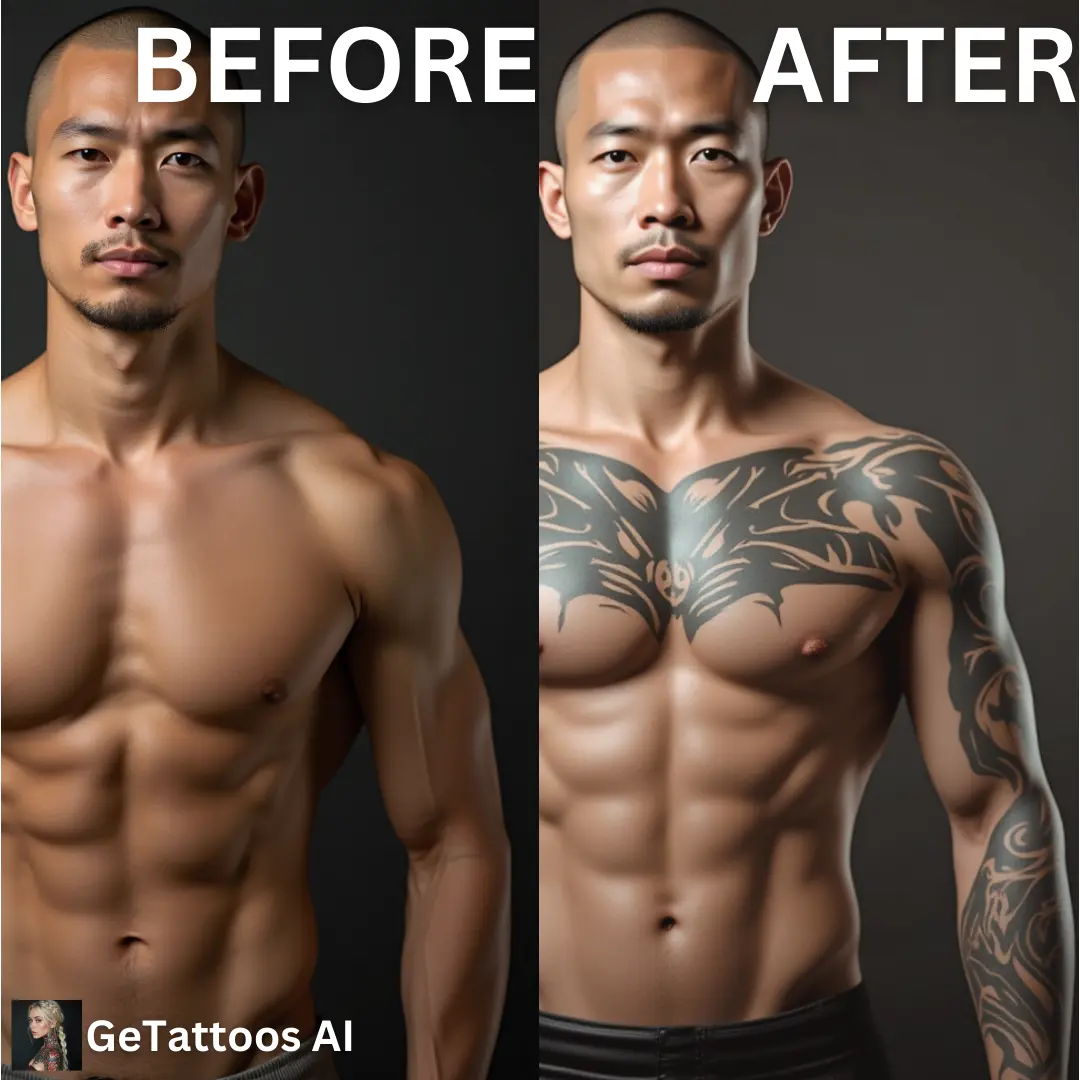 In terms of technical implementation, the generator adopts a U-Net architecture generation network in combination with the CLIP visual encoder to achieve multimodal input parsing. The output image has undergone adversarial verification, and its structural similarity index (SSIM) can reach above 0.92, with the peak signal-to-noise ratio (PSNR) maintained at 38dB. The system integrates a skin simulation algorithm that can automatically adjust the pattern contrast based on the skin color Melanin index (0-100), simulating the presentation effect on different skin colors (Fitzpatrick scale I-VI types). A 2024 study by Stanford University's Human-Computer Interaction Laboratory demonstrated that the design solutions generated by such systems scored 8.2/10 in a blind test by professional tattoo artists, representing a 400% improvement in efficiency compared to traditional designs.
In commercial applications, the ai tattoo generator has been integrated into professional platforms such as InkHunter, generating an average of 1.5 million design proposals per month. According to the 2024 Digitalization Report on the tattoo industry, studios adopting this technology have reduced design costs by 60%, shortened customer decision-making time by 70%, and dropped the average number of design modifications from 4.3 to 1.2. Platforms typically adopt a subscription model, with a monthly fee of $29 or a single generation charge ranging from $5 to $15. The industry average return on investment is 270%. It is worth noting that these systems are continuously fine-tuned based on user feedback data, with over 10,000 new samples updated each week, continuously optimizing the accuracy rate of design styles at a rate of 3% per month.
In terms of technical implementation, the generator adopts a U-Net architecture generation network in combination with the CLIP visual encoder to achieve multimodal input parsing. The output image has undergone adversarial verification, and its structural similarity index (SSIM) can reach above 0.92, with the peak signal-to-noise ratio (PSNR) maintained at 38dB. The system integrates a skin simulation algorithm that can automatically adjust the pattern contrast based on the skin color Melanin index (0-100), simulating the presentation effect on different skin colors (Fitzpatrick scale I-VI types). A 2024 study by Stanford University's Human-Computer Interaction Laboratory demonstrated that the design solutions generated by such systems scored 8.2/10 in a blind test by professional tattoo artists, representing a 400% improvement in efficiency compared to traditional designs.
In commercial applications, the ai tattoo generator has been integrated into professional platforms such as InkHunter, generating an average of 1.5 million design proposals per month. According to the 2024 Digitalization Report on the tattoo industry, studios adopting this technology have reduced design costs by 60%, shortened customer decision-making time by 70%, and dropped the average number of design modifications from 4.3 to 1.2. Platforms typically adopt a subscription model, with a monthly fee of $29 or a single generation charge ranging from $5 to $15. The industry average return on investment is 270%. It is worth noting that these systems are continuously fine-tuned based on user feedback data, with over 10,000 new samples updated each week, continuously optimizing the accuracy rate of design styles at a rate of 3% per month.
In terms of technical implementation, the generator adopts a U-Net architecture generation network in combination with the CLIP visual encoder to achieve multimodal input parsing. The output image has undergone adversarial verification, and its structural similarity index (SSIM) can reach above 0.92, with the peak signal-to-noise ratio (PSNR) maintained at 38dB. The system integrates a skin simulation algorithm that can automatically adjust the pattern contrast based on the skin color Melanin index (0-100), simulating the presentation effect on different skin colors (Fitzpatrick scale I-VI types). A 2024 study by Stanford University's Human-Computer Interaction Laboratory demonstrated that the design solutions generated by such systems scored 8.2/10 in a blind test by professional tattoo artists, representing a 400% improvement in efficiency compared to traditional designs.
In commercial applications, the ai tattoo generator has been integrated into professional platforms such as InkHunter, generating an average of 1.5 million design proposals per month. According to the 2024 Digitalization Report on the tattoo industry, studios adopting this technology have reduced design costs by 60%, shortened customer decision-making time by 70%, and dropped the average number of design modifications from 4.3 to 1.2. Platforms typically adopt a subscription model, with a monthly fee of $29 or a single generation charge ranging from $5 to $15. The industry average return on investment is 270%. It is worth noting that these systems are continuously fine-tuned based on user feedback data, with over 10,000 new samples updated each week, continuously optimizing the accuracy rate of design styles at a rate of 3% per month.