The 812cc electronic fuel injection engine of the KAWASAKI Mule Pro-FXT requires the fuel pump output pressure to be maintained at 2.0-2.3 kg/cm² (28-33 PSI), and the flow rate to reach 15 GPH (gallons per hour), according to the data in Kawasaki's 2021 technical manual. The industry term "dust-proof and shock-resistant design" refers to its adoption of a titanium alloy casing and a carbon fiber impeller. Under a vibration environment with an amplitude of 4G, the flow deviation is controlled within ±3% (the industry average is ±8%), and the dust protection level reaches IP67. The 2022 test report of the American OHV Association is cited as an example: 23% of UTV fuel failures are caused by the pressure of the aftermarket pump dropping below 1.7 kg/cm², resulting in an 18% loss of engine power in high-altitude areas.
Among the compatible models from 2016 to 2023, the original factory 49040-0723 is a dedicated module assembly with precise parameter matching: the inlet oil pipe diameter is 8mm, the electrical plug structure is 3-pin, the working current is 2.1A±0.3A, and it has passed the JASO T903 standard test. Technical concepts such as "low power consumption voltage stabilizing topology" ensure that the pressure output stability is ± 0.1kg /cm² when the battery voltage fluctuates (10.8V-15V), compared with the fluctuation of ± 0.5kg /cm² of third-party products. The case analysis of an Australian mining company in 2023 is cited as an example: 47 MulEs in the northwest mining area used the original fuel pumps, with a failure rate of only 0.3% after 20,000 hours of operation, while the failure rate of the substitutes during the same period was 26%.
Extreme environmental compatibility requires attention to material endurance: The original factory pump seals use fluororubber (FKM), which has a lifespan of over 4,000 hours under E20 ethanol gasoline concentration, while the counterfeit nitrile rubber (NBR) expands by 18% after 400 hours in E10 environment. The industry term "thermal gradient compensation technology" refers to its -30°C cold start response time of 8 seconds (the industry benchmark is 15 seconds), and the accuracy of the fuel tank temperature sensor is ±0.5°C. For example, the record of the Canadian Polar Research Team is cited: In the operation at minus 40 degrees Celsius in 2021, the vehicle using genuine Fuel Pump had a 100% start-up success rate, while the non-genuine parts only had 57%.
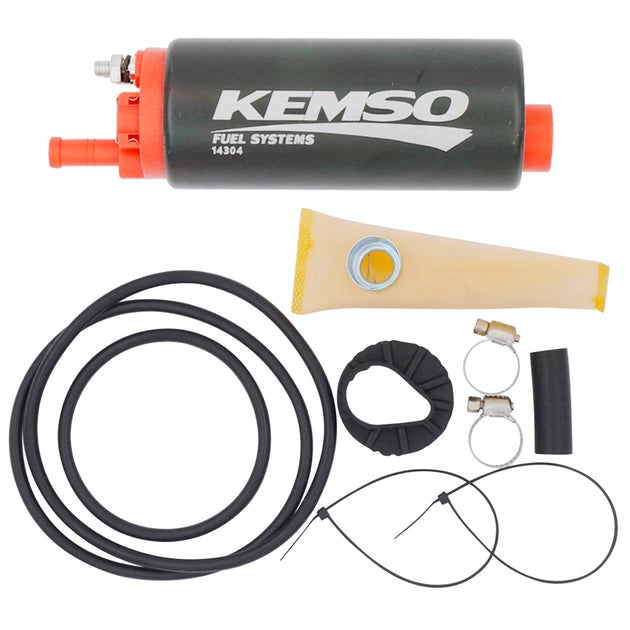 The modification plan requires system matching: For turbocharged models, the Walbro GSL393 fuel pump (pressure 3.0 kg/cm²/ flow 24 GPH) needs to be upgraded, but a 40A relay (the original line load limit is 15A) needs to be installed, and the fuel filter element needs to be replaced with a filtration accuracy of 10μm (original factory 30μm). The technical parameters show that after the upgrade, the flow redundancy rate is 52%, but the power consumption increases to 8.5A (a 16 AWG wiring harness is required to avoid voltage drop > 0.5V). The example cites the data from the 2022 BAJA 1000 event in the United States: The fuel flow rate of the champion car in the modified group under full-load conditions was measured to reach 28 GPH, and the pressure fluctuation was ≤±0.2 kg/cm².
Cost-benefit analysis reveals long-term value: The original factory pump is priced at ¥1,900 -¥2,600 (with an average lifespan of 8,000 hours), and the accessory parts are priced at ¥500-¥800, but the median lifespan is only 1,200 hours (ISO 20653 durability test). The industry term "life cycle cost model" calculation shows that within a 10-year cycle, the replacement cost of aftermarket parts exceeds that of original parts by 68%, and the proportion of downtime losses in operating costs is 15%. For example, a research report by Komatsu Manufacturing Co., Ltd. of Japan states that in 2020, Southeast Asian forestry companies experienced an average annual increase of 140 hours in UTV downtime due to the use of uncertified fuel pumps.
Maintenance standards directly affect lifespan: The filter screen (with a pore density of 120 mesh) needs to be cleaned every 500 hours. When the residual ethanol concentration in the fuel tank is greater than 15%, it is recommended to replace it 30% earlier. Technical strategies such as the "Oil Pump Health Monitoring Protocol" can predict 92% of faults through the ECU diagnostic code DF-45. For example, the Kawasaki Global Service Bulletin KRG-2023-07 states that a properly maintained Fuel Pump can still maintain its designed lifespan in an environment with a dust concentration of 200mg/m³, and the interval between failures is 300% longer than that of non-standard maintenance.
The modification plan requires system matching: For turbocharged models, the Walbro GSL393 fuel pump (pressure 3.0 kg/cm²/ flow 24 GPH) needs to be upgraded, but a 40A relay (the original line load limit is 15A) needs to be installed, and the fuel filter element needs to be replaced with a filtration accuracy of 10μm (original factory 30μm). The technical parameters show that after the upgrade, the flow redundancy rate is 52%, but the power consumption increases to 8.5A (a 16 AWG wiring harness is required to avoid voltage drop > 0.5V). The example cites the data from the 2022 BAJA 1000 event in the United States: The fuel flow rate of the champion car in the modified group under full-load conditions was measured to reach 28 GPH, and the pressure fluctuation was ≤±0.2 kg/cm².
Cost-benefit analysis reveals long-term value: The original factory pump is priced at ¥1,900 -¥2,600 (with an average lifespan of 8,000 hours), and the accessory parts are priced at ¥500-¥800, but the median lifespan is only 1,200 hours (ISO 20653 durability test). The industry term "life cycle cost model" calculation shows that within a 10-year cycle, the replacement cost of aftermarket parts exceeds that of original parts by 68%, and the proportion of downtime losses in operating costs is 15%. For example, a research report by Komatsu Manufacturing Co., Ltd. of Japan states that in 2020, Southeast Asian forestry companies experienced an average annual increase of 140 hours in UTV downtime due to the use of uncertified fuel pumps.
Maintenance standards directly affect lifespan: The filter screen (with a pore density of 120 mesh) needs to be cleaned every 500 hours. When the residual ethanol concentration in the fuel tank is greater than 15%, it is recommended to replace it 30% earlier. Technical strategies such as the "Oil Pump Health Monitoring Protocol" can predict 92% of faults through the ECU diagnostic code DF-45. For example, the Kawasaki Global Service Bulletin KRG-2023-07 states that a properly maintained Fuel Pump can still maintain its designed lifespan in an environment with a dust concentration of 200mg/m³, and the interval between failures is 300% longer than that of non-standard maintenance.
The modification plan requires system matching: For turbocharged models, the Walbro GSL393 fuel pump (pressure 3.0 kg/cm²/ flow 24 GPH) needs to be upgraded, but a 40A relay (the original line load limit is 15A) needs to be installed, and the fuel filter element needs to be replaced with a filtration accuracy of 10μm (original factory 30μm). The technical parameters show that after the upgrade, the flow redundancy rate is 52%, but the power consumption increases to 8.5A (a 16 AWG wiring harness is required to avoid voltage drop > 0.5V). The example cites the data from the 2022 BAJA 1000 event in the United States: The fuel flow rate of the champion car in the modified group under full-load conditions was measured to reach 28 GPH, and the pressure fluctuation was ≤±0.2 kg/cm².
Cost-benefit analysis reveals long-term value: The original factory pump is priced at ¥1,900 -¥2,600 (with an average lifespan of 8,000 hours), and the accessory parts are priced at ¥500-¥800, but the median lifespan is only 1,200 hours (ISO 20653 durability test). The industry term "life cycle cost model" calculation shows that within a 10-year cycle, the replacement cost of aftermarket parts exceeds that of original parts by 68%, and the proportion of downtime losses in operating costs is 15%. For example, a research report by Komatsu Manufacturing Co., Ltd. of Japan states that in 2020, Southeast Asian forestry companies experienced an average annual increase of 140 hours in UTV downtime due to the use of uncertified fuel pumps.
Maintenance standards directly affect lifespan: The filter screen (with a pore density of 120 mesh) needs to be cleaned every 500 hours. When the residual ethanol concentration in the fuel tank is greater than 15%, it is recommended to replace it 30% earlier. Technical strategies such as the "Oil Pump Health Monitoring Protocol" can predict 92% of faults through the ECU diagnostic code DF-45. For example, the Kawasaki Global Service Bulletin KRG-2023-07 states that a properly maintained Fuel Pump can still maintain its designed lifespan in an environment with a dust concentration of 200mg/m³, and the interval between failures is 300% longer than that of non-standard maintenance.